Capacity planning sounds like something for large organisations with a department dedicated to it.
In a bookkeeping practice it comes down to one question that returns every month: does the work
planned for next month fit in the hours that will be available?
Anyone who cannot answer that in advance answers it afterwards — with overtime, with deferred
files, or with a client hearing late that a deadline was missed. This article is about what it
takes to answer it in advance, and what to look for when choosing an instrument for it.
What capacity planning actually means in a firm
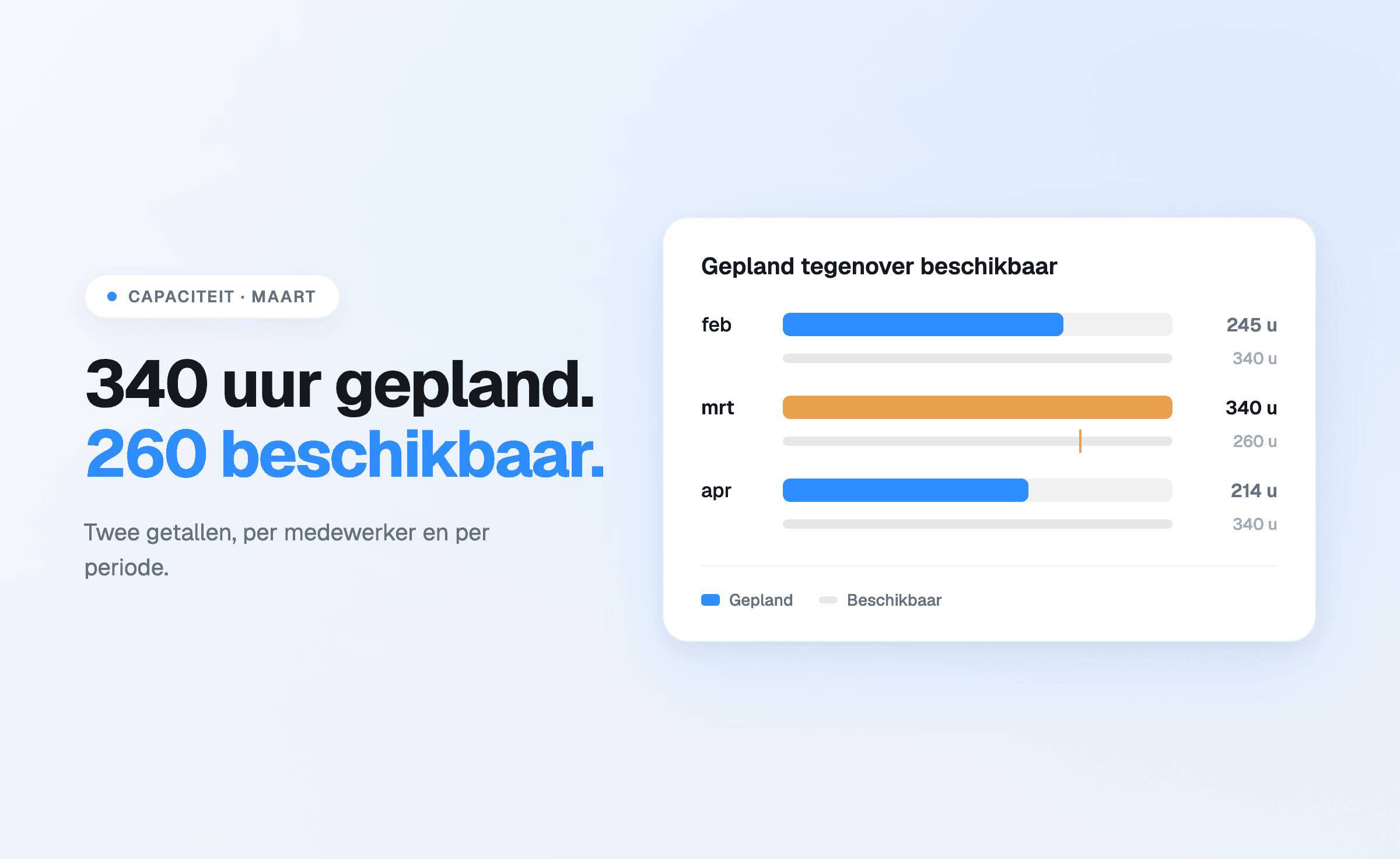
Two numbers, per employee and per period.
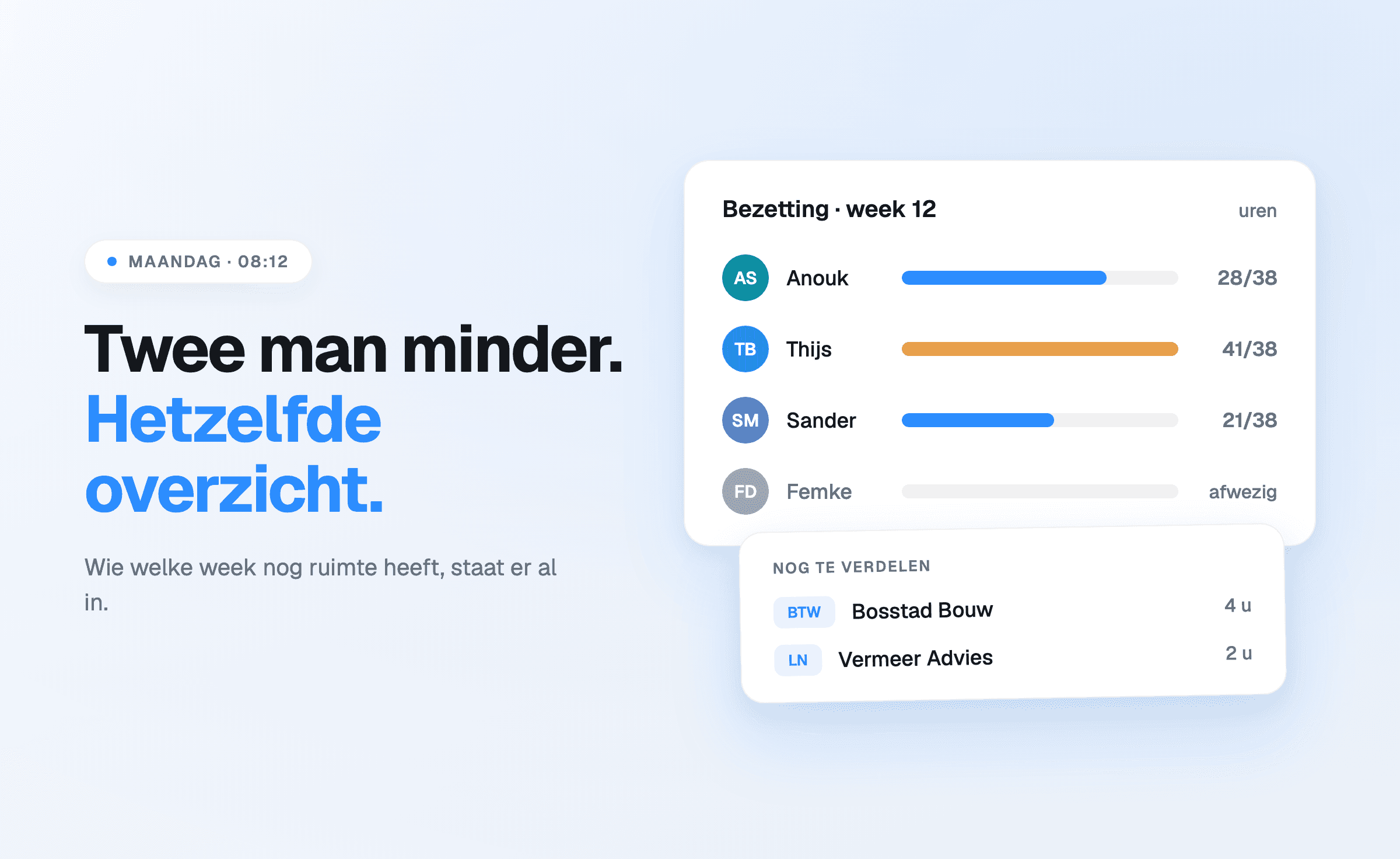
On one side the available hours: contract hours, minus leave, minus absence, minus the time
that structurally goes to non-billable work. On the other side the planned hours: the sum of
the activities sitting with that employee in that period.
The difference between those two is capacity planning. Everything else — charts, forecasts,
scenarios — is a way of presenting those same two numbers. A firm without reliable figures gets
nothing out of a prettier dashboard.
Why a spreadsheet rarely manages it
The bottleneck is not the arithmetic but keeping it current. Planned hours change as soon as work
is redistributed; available hours change as soon as someone takes leave. In a spreadsheet those
are two manual edits made by two different people — or not at all.
The result is familiar: the overview is correct on the day it is made and loses value every week
after that, precisely when it would be needed.
Five things to look for when choosing
1. Do planned and available hours come from the same system?
As long as leave sits in one overview and the planning in another, the difference stays manual
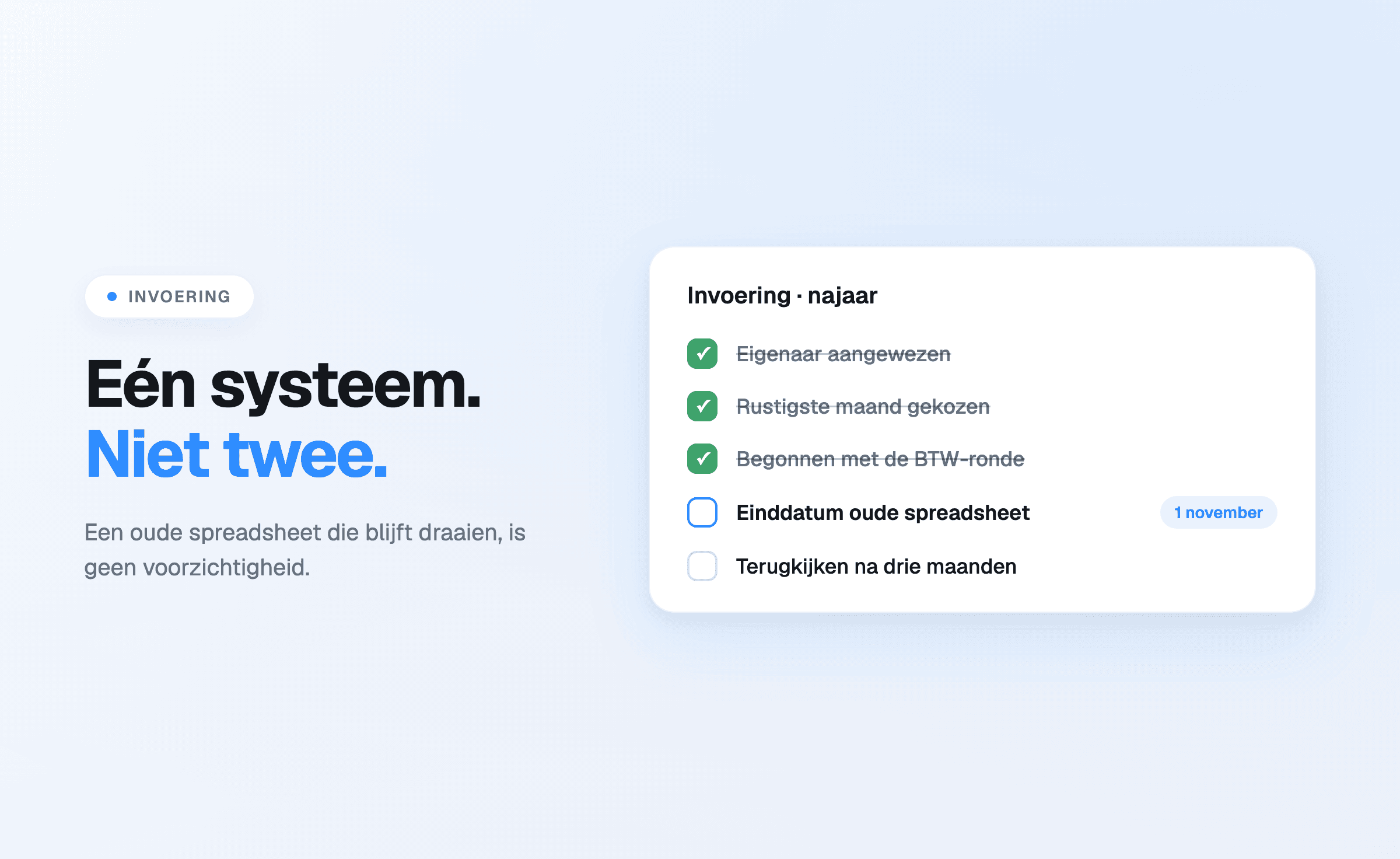
work. In Offsoo, leave, absence and overtime sit with time tracking and planned hours sit on the activities in the planning grid, so the difference can be read per month or per week.
2. Do hours hang off the work, or off a separate estimate?
A capacity plan detached from the actual work ages immediately. It only becomes usable once
planned hours are a property of the activity itself — this VAT return, that year-end file, this
client.
3. Is recurring work configured as recurring?
Most practice work returns at a fixed frequency — monthly, quarterly, four-weekly, half-yearly or
annually. If it has to be re-entered every period, the plan is out of date within two rounds.
4. Is anything readable across periods?
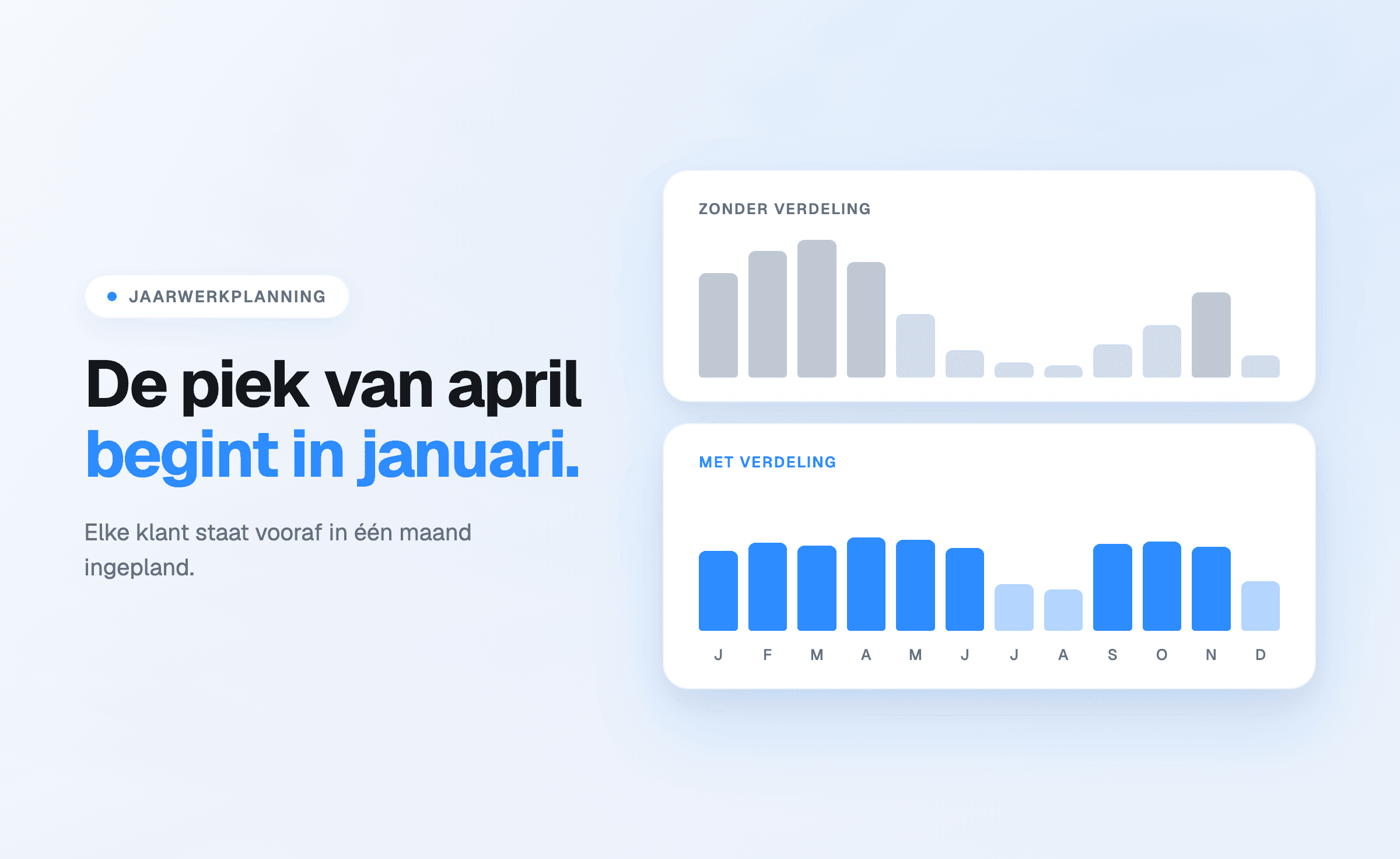
One month says little. The pattern says everything: which months are structurally too full, which
employee consistently goes over, which activity always costs more time than it is given. That
requires planned and recorded hours to be placed side by side.
5. Can the firm work with it unaided?
An instrument only understood by the person who configured it is not capacity planning but a
dependency. The test is simple: can an employee who did not help build it see for themselves how
their month looks?
What it delivers once those two numbers hold
- Imbalance is visible in advance. A month standing at 340 hours against 260 available can
still be moved in the month before.
- Redistribution is about facts. Who has room can be read rather than reasoned.
- Estimates improve. Recorded hours next to planned hours show which activities are
structurally too tight.
- Hiring becomes arithmetic. Whether another employee is needed can be answered with the
structural gap between planned and available across a full year.
What it is not about
Capacity planning does not predict absence and does not distribute work by itself. Offsoo does not
move activities automatically when someone falls ill; that judgement stays with the firm. What it
does is prepare the data on which that judgement is made — and that is exactly the part that ages
fastest in a spreadsheet.
What such a redistribution looks like in practice is described in staffing during peaks and absence.
Start a free 14-day trial or book a
demo.